Puzzle Galaxies mixes match-3 puzzles with active enemy threats
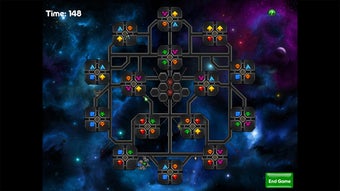
Puzzle Galaxies, developed by Evermore Game Studios, places the player on a futuristic space station where the goal is organizing jewels into destination pods under pressure. The game converts classic match-3 logic into a reactive loop by swapping jewels between pods and introducing enemy ships that can steal pieces. It includes handcrafted stages, power-ups and an untimed mode. Casual puzzle fans who prefer short sessions and a science-fiction aesthetic are the intended audience.
The setting gives consequence to every swap
So, you operate inside a space station where each move matters, because the objective requires matching four identical jewels inside specific pods rather than lining up adjacent tiles. The core loop asks you to plan transfers between containers while balancing immediate pod goals and longer-term arrangements. That deviation from standard adjacency rules reframes familiar match-3 thinking into a logistics-style puzzle challenge.
Enemy ships and special elements alter how you plan moves
Thus, real-time interference forces reactive play: the game includes five distinct ship types that actively steal jewels from pods, creating short windows of loss and recovery. Special elements like bonus pods and locked safes demand specific solutions, and the title exposes two modes, a standard timed challenge and an unlimited-time option, so players can choose speed-focused or methodical approaches.
The presentation trades candy brightness for a quieter sci-fi tone
Soothing music and a space-station palette replace the sugary visuals common to the genre; the soundtrack is described as relaxing and the aesthetic emphasizes galactic environments. The game supports macOS installationsor later) and needs roughly 50 MB of storage. It also includes Steam integration features such as trading cards, a detail collectors may appreciate.
Level design shapes difficulty and return play
The game delivers 68 handcrafted levels that introduce new obstacles and enemy types as you progress, which keeps later stages focused on composite puzzles. Progression leans on level variety rather than on expansive unlock trees, so replay value depends on how compelling players find the stage designs. Short-session pacing and the untimed mode give alternate ways to revisit levels for different play styles.
A practical pick for players who prefer reactive, short-session puzzles
For players who enjoy quick, decision-driven puzzle sessions with a science-fiction skin, the game suits those who like active threats against their puzzle plans. Community feedback is mixed, particularly around uneven difficulty spikes and repetitive loops during long runs, so those concerns should factor into expectations. The game rewards players who favor tactical swaps and episodic play over long-form progression.